Korean Bibimbap
Highlighted under: Classic World Food Inspiration
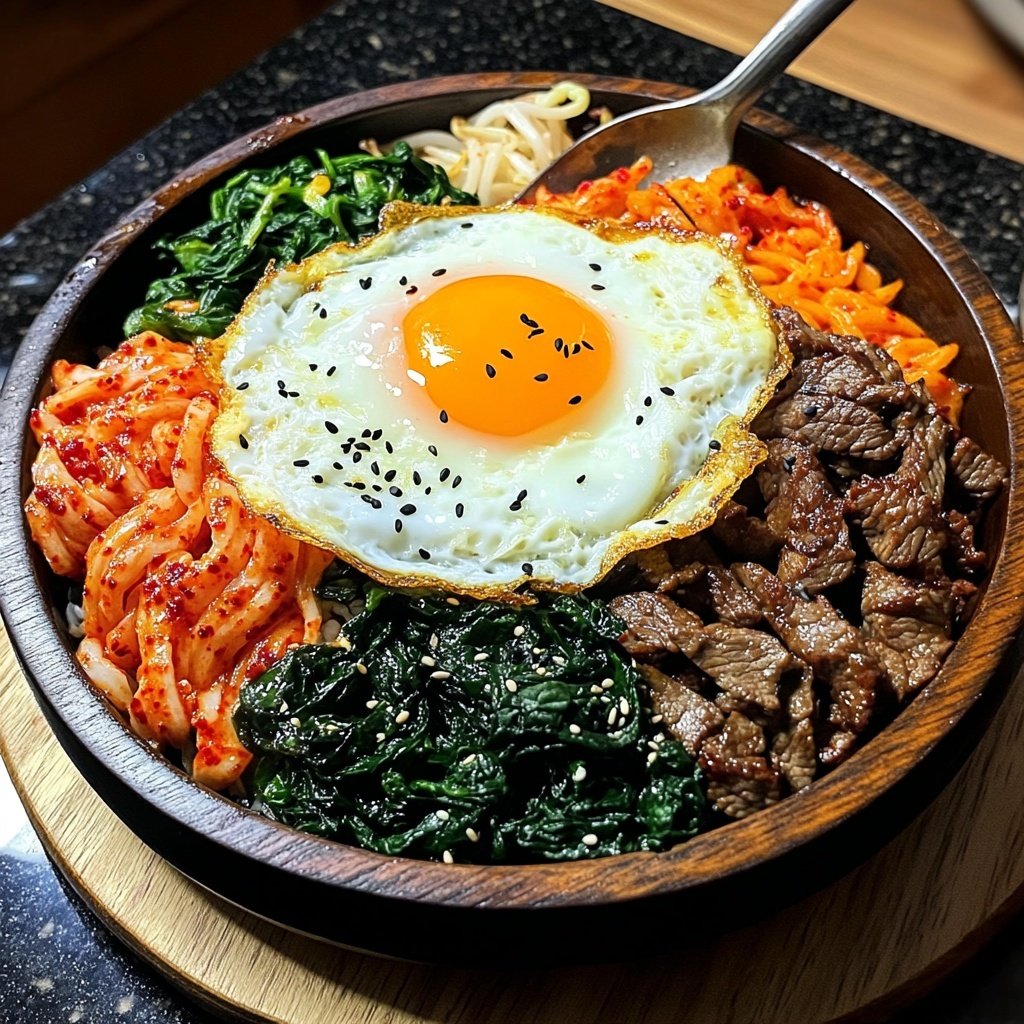
Korean Bibimbap is a vibrant and flavorful rice dish that brings together a variety of ingredients in a harmonious way. It's not only visually appealing but also packed with nutrients and taste.
Discover the rich culinary heritage of Korea with this delicious Bibimbap recipe. A perfect balance of flavors and textures awaits in this vibrant dish.

Why You'll Love This Recipe
- A colorful array of fresh vegetables and proteins
- Customizable with your favorite toppings
- Hearty and fulfilling, perfect for any meal
A Nutritional Powerhouse
Korean Bibimbap is not only a feast for the eyes but also a nutritional powerhouse. Packed with colorful vegetables like spinach, carrots, and zucchini, this dish delivers a range of vitamins and minerals essential for a balanced diet. Spinach, for example, is rich in iron and calcium, while carrots provide a healthy dose of beta-carotene, promoting good vision and skin health.
The inclusion of bean sprouts adds a crunchy texture and boosts the dish's fiber content, aiding digestion and keeping you feeling full longer. With a mix of proteins from the eggs and shiitake mushrooms, bibimbap ensures that you’re not just eating a meal—you’re nourishing your body.
Customizable and Versatile
One of the best features of Korean Bibimbap is its incredible versatility. Whether you're a meat lover or a vegetarian, this dish can be tailored to suit your dietary preferences. You can easily swap out the proteins, using tofu or different types of meat, and add your favorite vegetables to create a unique version every time.
This level of customization makes bibimbap an excellent option for meal prep. Prepare a big batch of rice and a variety of toppings, and you can mix and match throughout the week, keeping your meals exciting and satisfying without the monotony.
A Culinary Experience
Making Korean Bibimbap is a delightful culinary experience that invites you to engage with your food. The process of sautéing vegetables, frying eggs, and assembling the dish allows you to appreciate the vibrant colors and textures of each ingredient. As you layer them together, you create not just a meal, but a work of art.
When you finally mix everything together with gochujang and sesame oil, the flavors meld beautifully, offering a rich and complex taste in every bite. It's a dish that encourages sharing and enjoying together, making it perfect for family dinners or gatherings with friends.
Ingredients
For the Bibimbap
- 2 cups cooked rice
- 1 cup spinach, blanched
- 1 cup bean sprouts, blanched
- 1 medium carrot, julienned
- 1 zucchini, julienned
- 4 shiitake mushrooms, sliced
- 2 eggs
- Sesame oil
- Gochujang (Korean chili paste)
- Soy sauce
- Salt to taste
Mix and match your favorite vegetables to personalize your bibimbap!
Instructions
Prepare the Vegetables
Heat a tablespoon of sesame oil in a skillet. Sauté the carrots and zucchini separately until tender. Season with a pinch of salt.
Cook the Mushrooms
In the same skillet, add the sliced shiitake mushrooms and cook until browned. Set aside.
Fry the Eggs
In another pan, fry the eggs sunny-side up until the whites are set but the yolks are still runny.
Assemble the Bibimbap
In a large bowl, place the cooked rice at the bottom. Arrange the sautéed vegetables, spinach, and bean sprouts on top. Add the fried egg in the center.
Serve with Sauce
Drizzle with sesame oil and gochujang. Mix everything together before eating.
Enjoy your homemade Korean Bibimbap!
Pro Tips
- Feel free to add your favorite protein like beef, chicken, or tofu for an extra boost of flavor.
Tips for the Perfect Bibimbap
To elevate your bibimbap experience, consider using short-grain rice, which has a sticky texture that holds the ingredients together better than long-grain rice. This makes it easier to mix and enjoy every flavorful bite. Additionally, don’t hesitate to experiment with different vegetables based on the season or your personal preferences.
If you prefer a bit of crunch, topping your bibimbap with roasted seaweed or sesame seeds can add an extra layer of texture and flavor. The key is to balance the flavors, so taste as you go and adjust the seasoning to suit your palate.
Storing and Reheating Leftovers
If you have leftovers, bibimbap stores well in the refrigerator for up to three days. To keep the ingredients fresh, store the vegetables separately from the rice and egg. When you're ready to eat, simply reheat the rice in the microwave or on the stovetop, and add the cold vegetables and egg just before serving.
For a quick and easy lunch option, consider making a bibimbap bowl with your leftovers. Just layer the rice, vegetables, and protein in a portable container, and you have a nutritious meal ready to enjoy on the go.
Questions About Recipes
→ Can I make Bibimbap vegetarian?
Absolutely! You can skip the egg or use tofu as a protein substitute.
→ What is Gochujang?
Gochujang is a Korean chili paste that adds a sweet and spicy flavor to dishes.
→ How can I store leftovers?
Store the components separately in airtight containers in the refrigerator for up to 3 days.
→ Can I use brown rice instead of white rice?
Yes, brown rice is a great alternative for a healthier option!
Korean Bibimbap
Created by: Thea Montgomery
Recipe Type: Classic World Food Inspiration
Skill Level: Intermediate
Final Quantity: 4 servings
What You'll Need
For the Bibimbap
- 2 cups cooked rice
- 1 cup spinach, blanched
- 1 cup bean sprouts, blanched
- 1 medium carrot, julienned
- 1 zucchini, julienned
- 4 shiitake mushrooms, sliced
- 2 eggs
- Sesame oil
- Gochujang (Korean chili paste)
- Soy sauce
- Salt to taste
How-To Steps
Heat a tablespoon of sesame oil in a skillet. Sauté the carrots and zucchini separately until tender. Season with a pinch of salt.
In the same skillet, add the sliced shiitake mushrooms and cook until browned. Set aside.
In another pan, fry the eggs sunny-side up until the whites are set but the yolks are still runny.
In a large bowl, place the cooked rice at the bottom. Arrange the sautéed vegetables, spinach, and bean sprouts on top. Add the fried egg in the center.
Drizzle with sesame oil and gochujang. Mix everything together before eating.
Extra Tips
- Feel free to add your favorite protein like beef, chicken, or tofu for an extra boost of flavor.
Nutritional Breakdown (Per Serving)
- Calories: 550 kcal
- Total Fat: 18g
- Saturated Fat: 3g
- Cholesterol: 186mg
- Sodium: 500mg
- Total Carbohydrates: 84g
- Dietary Fiber: 6g
- Sugars: 5g
- Protein: 20g